Email marketing and newsletters for SMEs: rules, tools and prices
Email marketing for Belgian SMEs: newsletters or email, consent, avoiding spam, email tool prices and what to write. Your practical guide.
4 min read
Published on 01/09/2026 · By Blaise Calinaud, Eazyclick.
Email remains the channel you truly own: no algorithm, no advertising bill to reach the people who follow you. But you still need to write to the right people, with their permission, and stay out of spam folders. This guide explains email marketing for a Belgian small business, the rules to follow, the tools and their prices, and how to get started without spending your evenings on it.
What is email marketing?
Email marketing covers all the emails a business sends to customers and prospects to inform them or sell to them: newsletters, promotions, product launches, quote follow-ups and birthday messages. It differs from ordinary email because it is sent in bulk to a list of people who have agreed to receive it.
There are three types of email:
- The newsletter: a regular email (monthly, quarterly) with news, advice and a few offers;
- The campaign: a one-off email about an offer, event or season;
- Automated emails: triggered by customer behaviour (sign-up, first order, abandoned basket, three months without a purchase).
What is the difference between an email and a newsletter?
A standard email addresses one person about a specific matter: a quote, a reply, a confirmation. A newsletter is an email sent to an entire subscriber list at once, with shared content and an unsubscribe link. It follows direct marketing rules, including prior consent.
This difference matters when choosing a tool: sending a newsletter from your usual inbox (using BCC) almost always ends up in spam and offers neither proper unsubscribing nor statistics. An email marketing tool manages bulk sending, unsubscribes and proof of consent.
Do you need your contacts' consent to send them a newsletter?
Yes, as a general rule. In Belgium, sending advertising by email to an individual requires their prior agreement. There is an exception for existing customers, covering products or services similar to those they have bought, provided they can easily opt out at purchase and in every email.
In practice:
- An unticked box at sign-up, with a clear sentence explaining what the person will receive;
- A record of the date, source and accepted wording, so you can prove consent;
- An unsubscribe link in every email, working in one click;
- No purchased lists: these contacts have agreed to nothing.
The Belgian Data Protection Authority explains these rules and their exceptions on its direct marketing page.
How do you keep your emails out of spam?
To avoid spam, send from your own authenticated domain (SPF, DKIM and DMARC), write only to people who requested it, immediately remove addresses that bounce or complain, and offer one-click unsubscribing. Gmail requires this of bulk senders.
Google's published guidance for bulk senders (Email sender guidelines) recommends keeping spam rates below 0,10 % and never reaching 0,30 %. A few simple habits:
- remove addresses that have been inactive for more than a year;
- keep a regular rhythm rather than sending in bursts;
- do not use a free address (Gmail, Outlook) as your newsletter sender.
How much does an email marketing tool cost?
An email marketing tool costs from zero euros (free plans with contact or sending limits) to several hundred euros a month. Most providers charge by the number of contacts or emails sent: the price rises with your list. Also account for setup time: sending domain, templates and imports.
Before choosing, compare over 24 months for the list size you are aiming for, not today's, and check three things:
- Where do your contacts live? If your customers are in a CRM or online shop, a connected tool avoids exports and lists drifting apart.
- Who sees the results? Opens and clicks, of course, but above all the sales generated by an email.
- Where is the data hosted? For a European small business, hosting in the EU makes GDPR compliance simpler.
What should a small business newsletter contain?
A good small business newsletter has one main idea that is useful to the reader, followed by two or three short updates and a single clear call to action. New products, seasonal advice, behind-the-scenes stories, subscriber-only offers: what works is what your customers already ask you at the counter or on the phone.
A simple structure to reuse each month:
- a short, specific subject line (“Your winter tyres before 15 November”);
- the month's topic in three paragraphs, with an image;
- two short updates (new product, opening hours, event);
- one button, just one, to the page that matters.
How does it work with Eazyclick?
Eazyclick's Email marketing module sends newsletters and campaigns using the contacts your website, shop and CRM already collect. Segments (customers, prospects, inactive contacts) are recalculated for every send, and one-click unsubscribing and timestamped sign-ups are handled for you.
The module includes 5 000 emails per month, branded templates with desktop and mobile previews, scheduled sending, tracking for opens, clicks and sales generated, and setup with your project manager (colours, sending domain, first templates). It costs €190 to set up, then €44/month over 12 months or €35/month over 24 months excl. VAT, priced per website, not per contact.
To know who to write to and when, start with our CRM guide. And if you want to reward your most loyal subscribers, read the digital loyalty card guide.
What is the best free email marketing tool?
There is no single best free tool: most major providers offer a free plan, limited by contacts, daily sends or features, with their logo in your emails. It is enough to test a first newsletter. As your list grows, compare the price for your number of contacts over two years.
The real cost of a free tool is often duplicate entry: exporting your customers for every send and never knowing which email led to which sale.
You might also like these articles
-
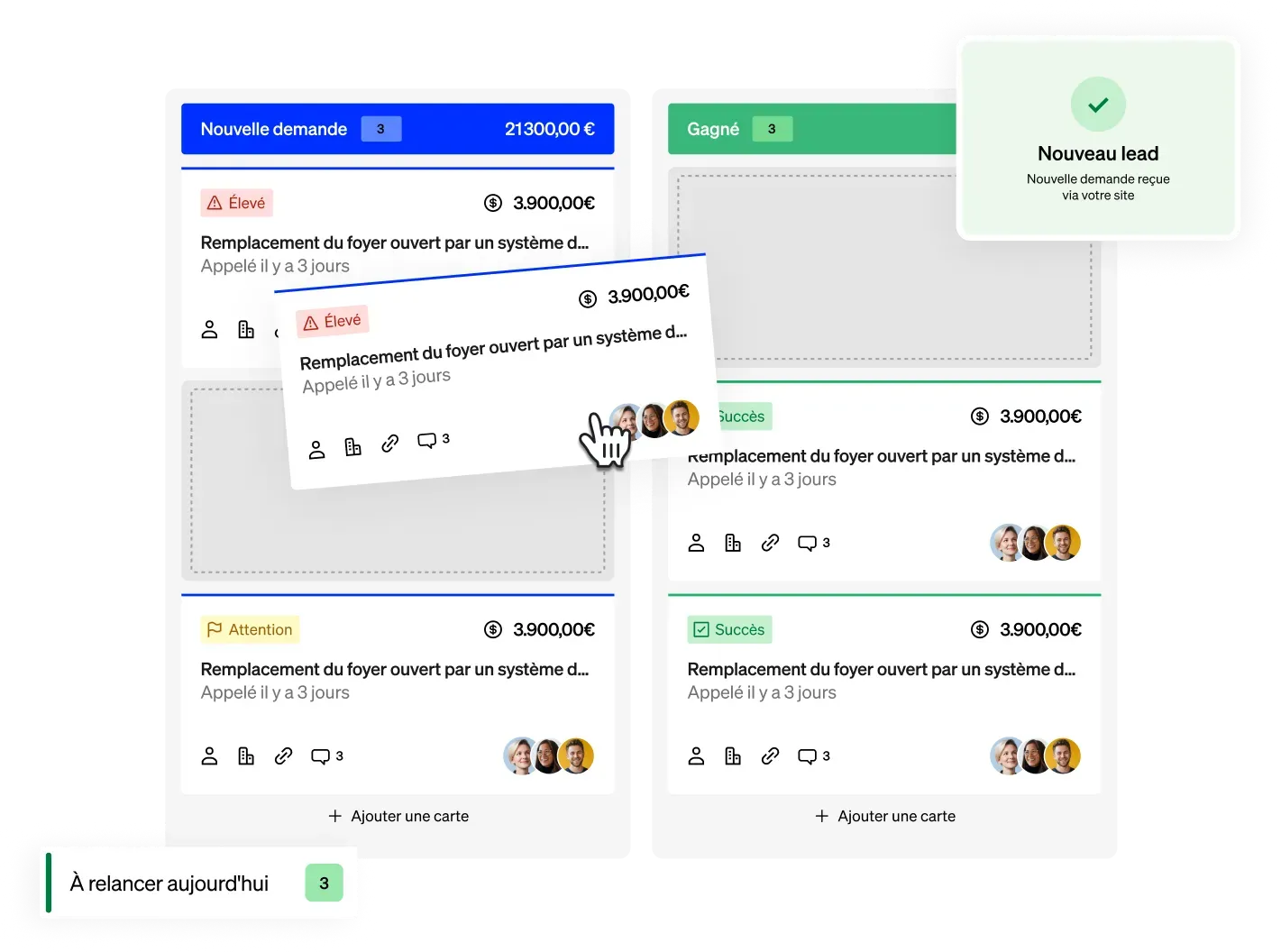
CRM: definition, types and how to choose for a Belgian SME
What is a CRM, what does it do, what does it cost and how do you choose one for a Belgian SME? Definition, 3 types, CRM vs ERP, pricing and GDPR.
-
Digital loyalty cards: a guide for retailers
How digital loyalty cards work, how to create one, app, Wallet or customer area, and mistakes to avoid: a guide for Belgian retailers.
-
WhatsApp Business for SMEs: pricing, API and team use
Free app or API, Meta message pricing since 2025, team use and CRM integration: what small businesses need to know about WhatsApp Business.


Useful tips, straight to your inbox
Get the latest Eazyclick tips and join a community that shares, learns and moves forward together.
Thank you!
Your subscription is confirmed. The next tips will reach your inbox soon.

Further reading
- Modules
- Topic


